Packaging Artwork Proofreading Checklist Before Print and Prepress
A practical packaging artwork proofreading checklist for catching copy, barcode, claim, layout, and prepress mistakes before anything goes to print.
Use this at the final artwork gate
Review the exact print-ready version after the last copy, localization, barcode, dieline, and prepress change. Automated proofreading can catch rendered text errors, but regulatory claims and production specifications still require the responsible human approvers.
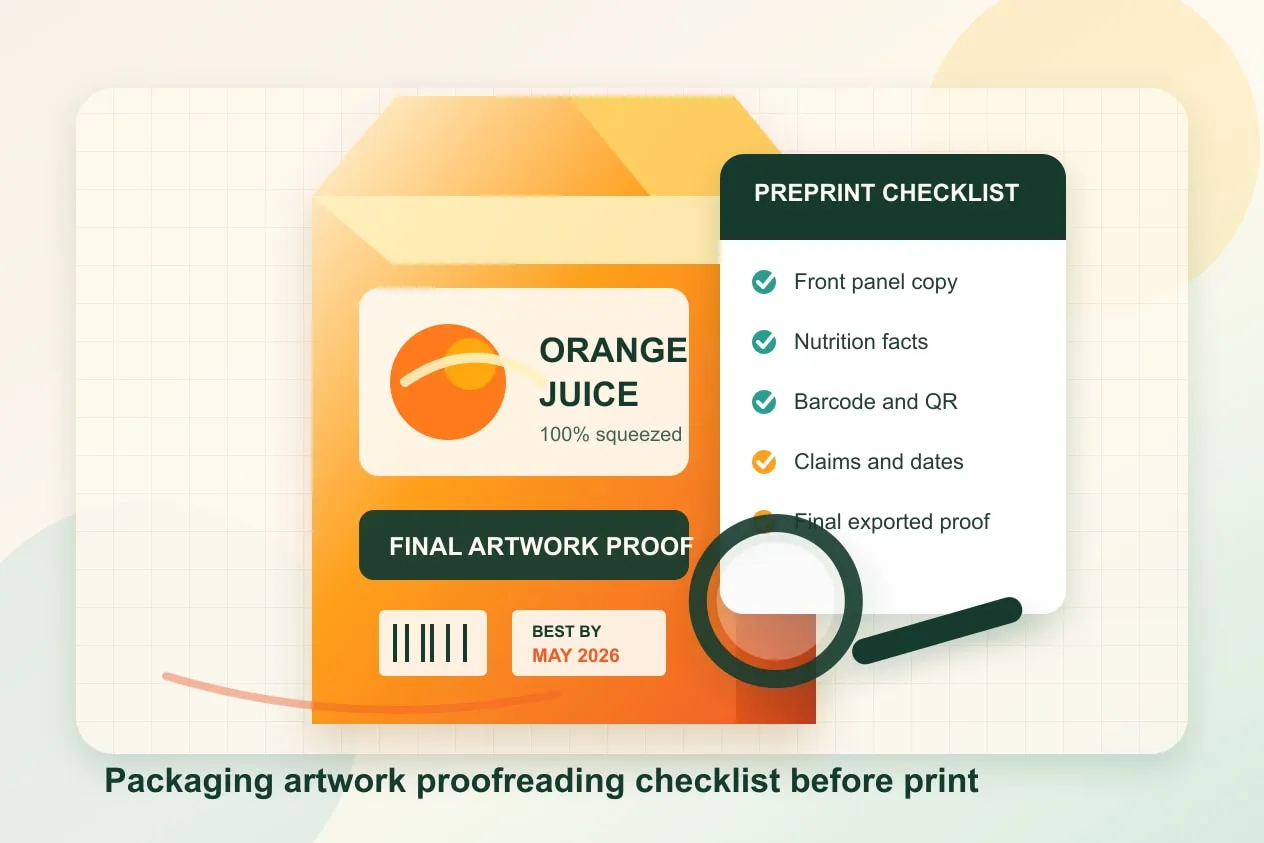
A packaging artwork proofreading checklist is the last line of defense between a clean final proof and a costly print mistake. By the time an orange juice carton, snack pouch, box, sleeve, label, or insert is ready for production, the copy has usually passed through marketing, design, regulatory, brand, legal, prepress, and a print vendor. That handoff chain is exactly why small errors survive.
The risky text is no longer sitting in a document where a normal spellchecker can help. It is wrapped around panels, squeezed into nutrition boxes, placed near dielines, flattened into PDF previews, or exported as a print-ready image. This checklist is built for that final packaging artwork proofing moment: the version that will actually go to print.
Important note: this is an operational QA checklist, not legal advice. For regulated packaging, use official guidance such as the FDA Food Labeling Guide, the FDA Nutrition Facts Label guidance, your compliance team, and your category-specific requirements.
Packaging artwork proofreading checklist before print
Use this checklist after the design is visually close to final, but before files are released to the printer. It works for cartons, labels, pouches, cans, bottles, trays, mailers, retail boxes, and ecommerce packaging.
1. Confirm you are reviewing the final artwork file
- Review the exact file being released. Do not only proof the copy deck, Figma frame, Illustrator artboard, or an earlier PDF. Check the final exported artwork, print proof, or vendor proof.
- Verify the version number. File names like final, final-v2, approved, and printer-final are famous for lying. Match the proof against the work order, SKU, product name, size, language, and date.
- Check every panel. Front, back, side, top, bottom, flap, insert, seal, sticker, and inner sleeve text can all carry customer-facing mistakes.
- Recheck after every revision. A tiny price, flavor, claim, barcode, nutrition, or legal update can introduce a new typo after the main copy was approved.
2. Proof the front panel like a customer
The front panel gets the most attention and usually contains the highest-risk short copy. Read it in the order a shopper would see it: brand, product name, flavor or variant, claim, net quantity, badge, CTA, then any required statement.
- Product name, sub-brand, flavor, scent, size, and variant.
- Net weight, volume, count, serving language, and unit formatting.
- Claims such as organic, fresh, natural, gluten-free, no added sugar, recyclable, compostable, made in USA, cruelty-free, or limited edition.
- Promotional lines, seasonal badges, callouts, and campaign copy.
- Typography details: missing accents, bad apostrophes, inconsistent capitalization, line breaks that change meaning, and words hidden by folds or curves.
3. Check regulated and required text separately
Do not treat regulatory copy as one block of tiny text. Make it a separate pass with the people responsible for compliance. For food and beverage packaging, confirm the statement of identity, net quantity, ingredients, allergen statements, manufacturer or distributor information, storage instructions, and Nutrition Facts panel against your approved source.
For nutrition formatting and U.S. food label requirements, start with FDA resources and internal compliance review. For claims that imply environmental benefit, the FTC Green Guides summary is a useful place to confirm that marketing language deserves extra scrutiny before it appears on packaging.
4. Review claims against the product, not just the copy
Packaging claims often sound polished while still being wrong for the SKU. Check each claim against the actual product, formulation, market, certification, and package material.
- Ingredient and formulation claims: no added sugar, high protein, vitamin C, non-GMO, caffeine-free, vegan, organic.
- Material and sustainability claims: recyclable, recycled content, compostable, plastic-free, refillable, biodegradable.
- Origin and manufacturing claims: made in USA, imported, locally sourced, farm fresh, cold pressed.
- Promotional claims: new, improved, bonus size, limited edition, free item, instant savings.
This is where packaging proofing overlaps with brand trust. A misspelled word is embarrassing; an inaccurate claim can create support, compliance, retailer, or recall pressure.
5. Test barcodes, QR codes, URLs, and variable data
Short strings cause long problems. Check them character by character, then test them with real devices and scanner workflows.
- Scan UPC, EAN, GTIN, Data Matrix, QR, or other barcodes from the final proof when possible.
- Confirm the barcode type and use case against an official source such as GS1 US barcode type guidance.
- Open every URL, QR destination, support email, social handle, coupon code, batch placeholder, and landing page.
- Check expiration dates, best-by date format, lot code area, variable print zones, and retailer-specific labels.
6. Do a brand consistency pass
Brand terms are easy to miss because everyone on the team already knows what they are supposed to say. Read them slowly anyway.
- Brand name, product family, flavor names, campaign names, trademark symbols, and registered marks.
- Approved capitalization, hyphenation, ingredient naming, abbreviations, and punctuation style.
- Voice and tone across front panel, back panel, instructions, warnings, and ecommerce callouts.
- Consistency across package sizes, variety packs, regional versions, and translated artwork.
If your team already uses a visual QA workflow, connect this pass with broader design proofing so packaging is reviewed in the same final-artwork context as ads, landing page graphics, and social creative.
7. Check layout, prepress, and print-production details
Proofreading packaging is not only about words. Some text mistakes are created by layout, crop, fold, print, or export decisions.
- Bleed, trim, safe area, dielines, fold lines, glue areas, hang holes, windows, and seals.
- Small text size, contrast, overprint, knockout text, white ink, foil, varnish, embossing, and spot-color layers.
- Image resolution, linked assets, missing fonts, outlined type, color profiles, and rich black usage.
- Panel orientation, barcode quiet zones, QR code contrast, and text that lands on a curve, crimp, seam, flap, or corner.
A quick QA table for packaging reviewers
| Area | What to proofread | Best evidence |
|---|---|---|
| Front panel | Product name, variant, claims, net quantity, badges. | Approved copy source and final artwork proof. |
| Regulatory copy | Ingredients, allergens, nutrition, warnings, distributor details. | Compliance-approved source and official guidance. |
| Machine-readable details | UPC, QR, GTIN, coupon codes, URLs, variable data. | Scanner test, live destination test, retailer specs. |
| Brand language | Names, trademarks, capitalization, campaign copy. | Brand guide and approved product database. |
| Prepress | Dielines, bleed, fonts, color, overprint, small text. | Printer proof, preflight report, physical mockup. |
How Gard helps with packaging artwork proofreading
Gard helps teams review text after it has become part of a visual asset. For packaging teams, that means you can check exported carton artwork, label previews, PDF screenshots, mockups, and other flattened proof images where ordinary document spellcheckers cannot see the words.
Start with the final proof, then use Gard's image spell checker workflow to catch spelling, grammar, punctuation, awkward wording, and context issues inside the actual artwork. If you need to pull the raw words from a proof first, the image to text tool can help you extract copy before doing a final visual review.
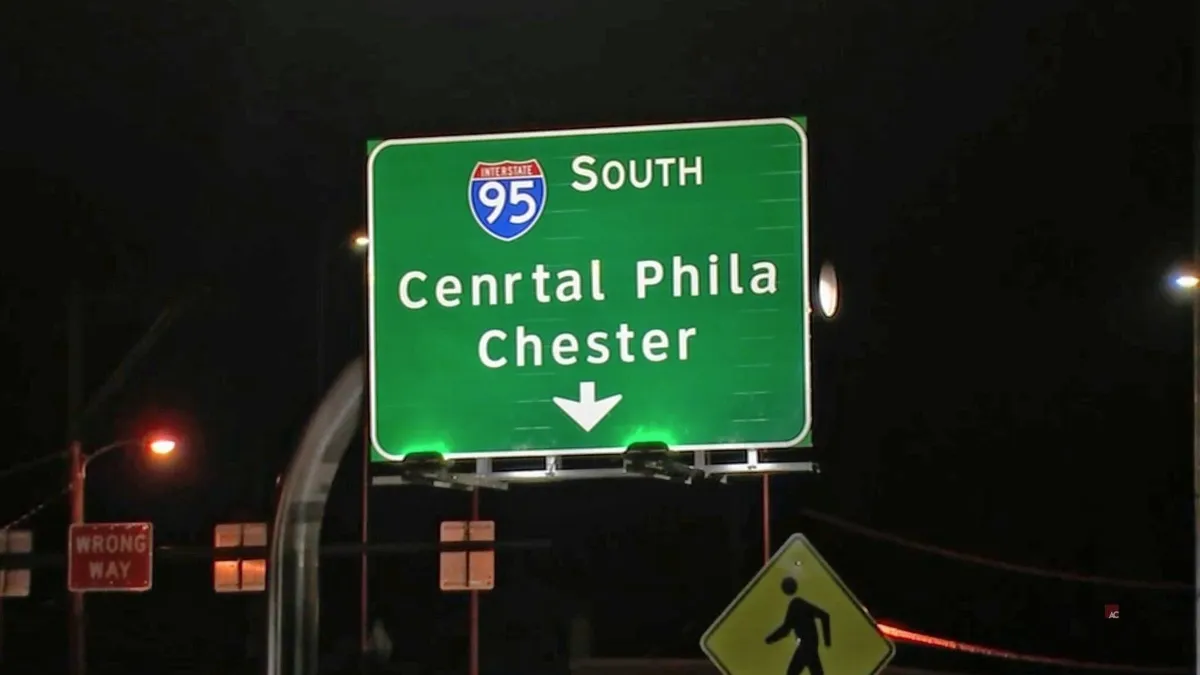
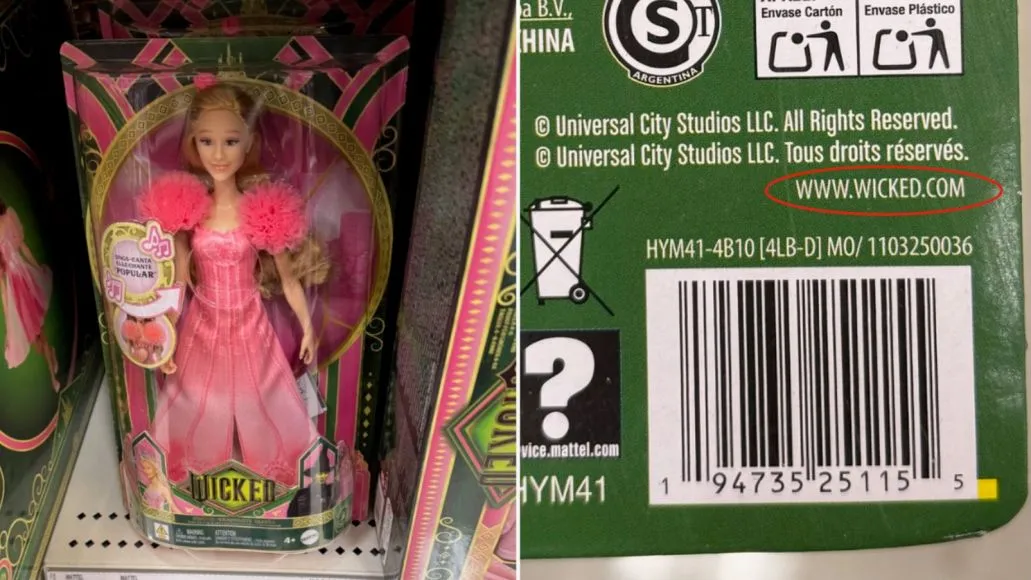
This is especially useful for packaging because many mistakes are introduced after the approved copy leaves the document. A resized panel, recreated vendor file, translated variant, edited barcode area, or last-minute claim can create a new issue in the artwork itself. That is the same pattern behind many public packaging, ad, and billboard mistakes.
Final preprint checklist
- Are you reviewing the exact final file that will be printed?
- Did someone check every panel, flap, label, sticker, and insert?
- Were regulated statements checked by the right compliance reviewer?
- Were claims verified against the actual SKU, market, formula, and package material?
- Did you scan barcodes and open QR codes, URLs, emails, and coupon destinations?
- Were brand names, trademarks, capitalization, and campaign terms checked letter by letter?
- Did prepress confirm bleed, dielines, fonts, color, overprint, and small-text readability?
- Did you run one final visual proofreading pass after the last revision?
Packaging artwork proofreading FAQ
What is packaging artwork proofreading?
Packaging artwork proofreading is the review of text and visual details inside the final package artwork before print. It includes spelling, grammar, product names, claims, regulatory copy, barcodes, layout, dielines, and print-production details.
Should I proofread the source copy or the final artwork?
Both, but the final artwork matters most before print. Source copy can be correct while the exported package proof still contains an old claim, broken line break, missing character, wrong barcode, or layout-driven mistake.
What is the biggest packaging proofreading risk?
The biggest risk is assuming that approved copy stayed approved after design revisions. Packaging errors often appear during resizing, localization, prepress cleanup, vendor recreation, or last-minute SKU updates.
Can Gard proofread packaging artwork?
Gard can help review text inside exported packaging artwork and proof images, which is where traditional document spellcheckers fail. For regulated categories, Gard should support your QA workflow alongside compliance review, not replace it.
Add an automated text pass before print
Use Gard to review the words inside an exported packaging proof, then complete the barcode, regulatory, dieline, and printer checks in the checklist.
Disclaimer: Gard provides automated design proofing powered by advanced AI. While highly accurate, we advise users to always conduct a final manual review of high-stakes business, medical, or legal graphics before sending to production.